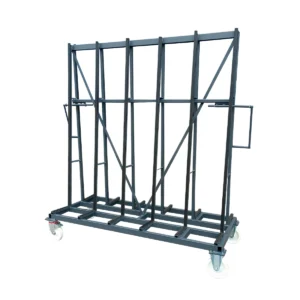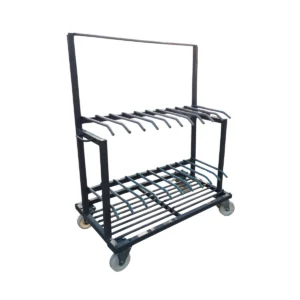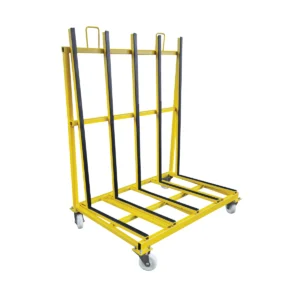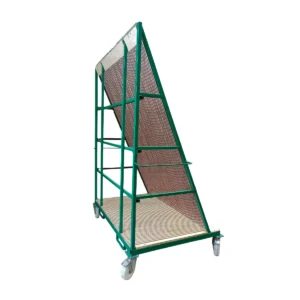

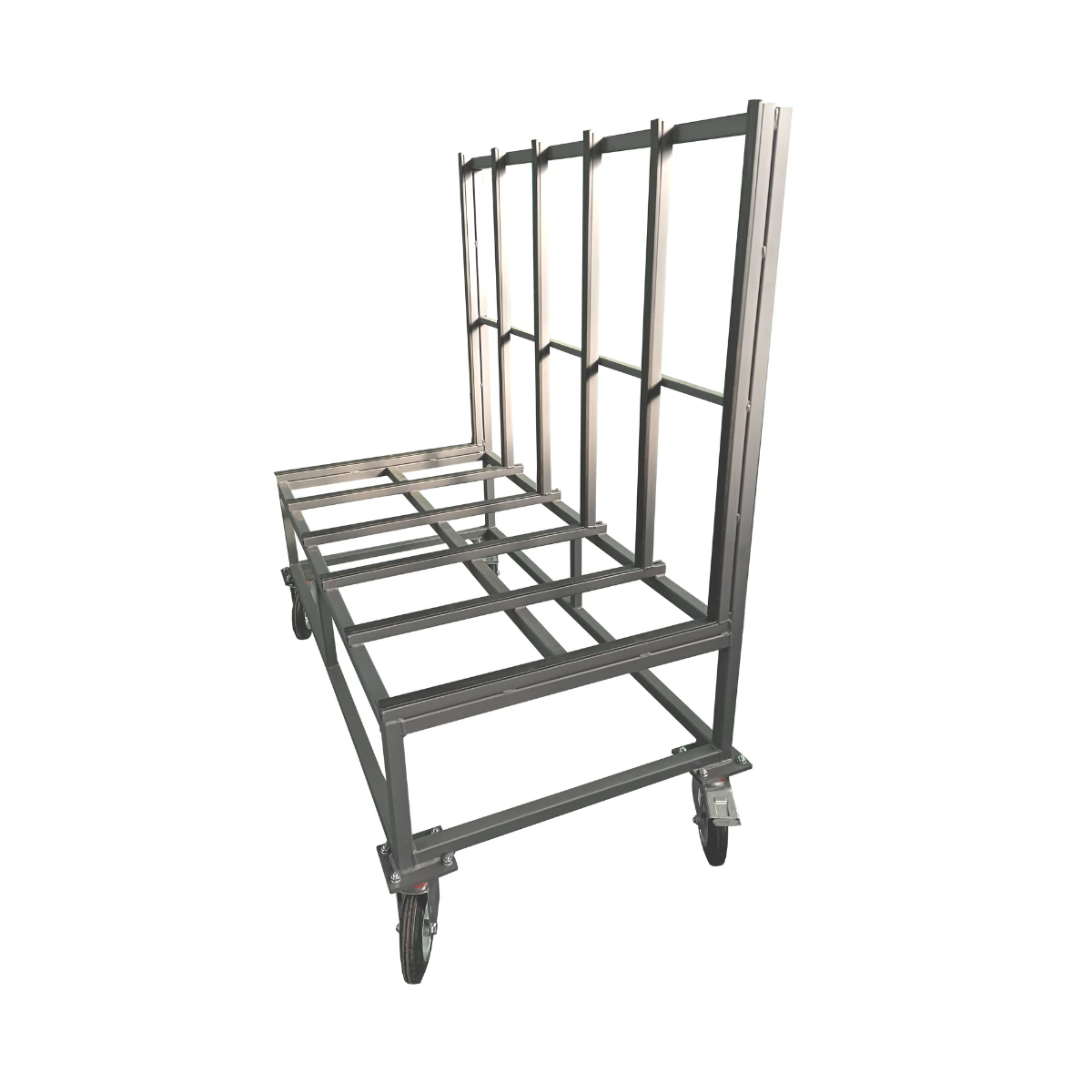
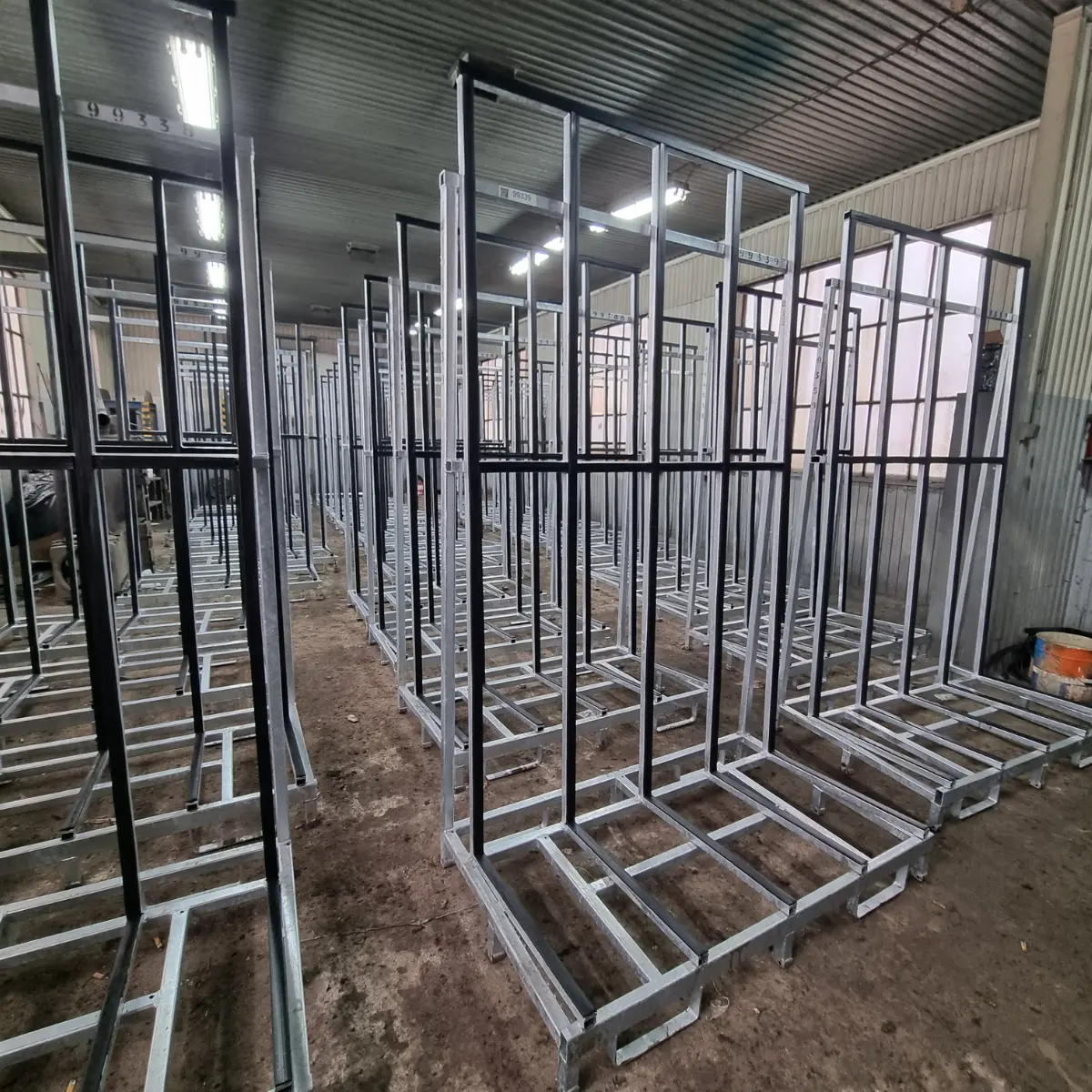
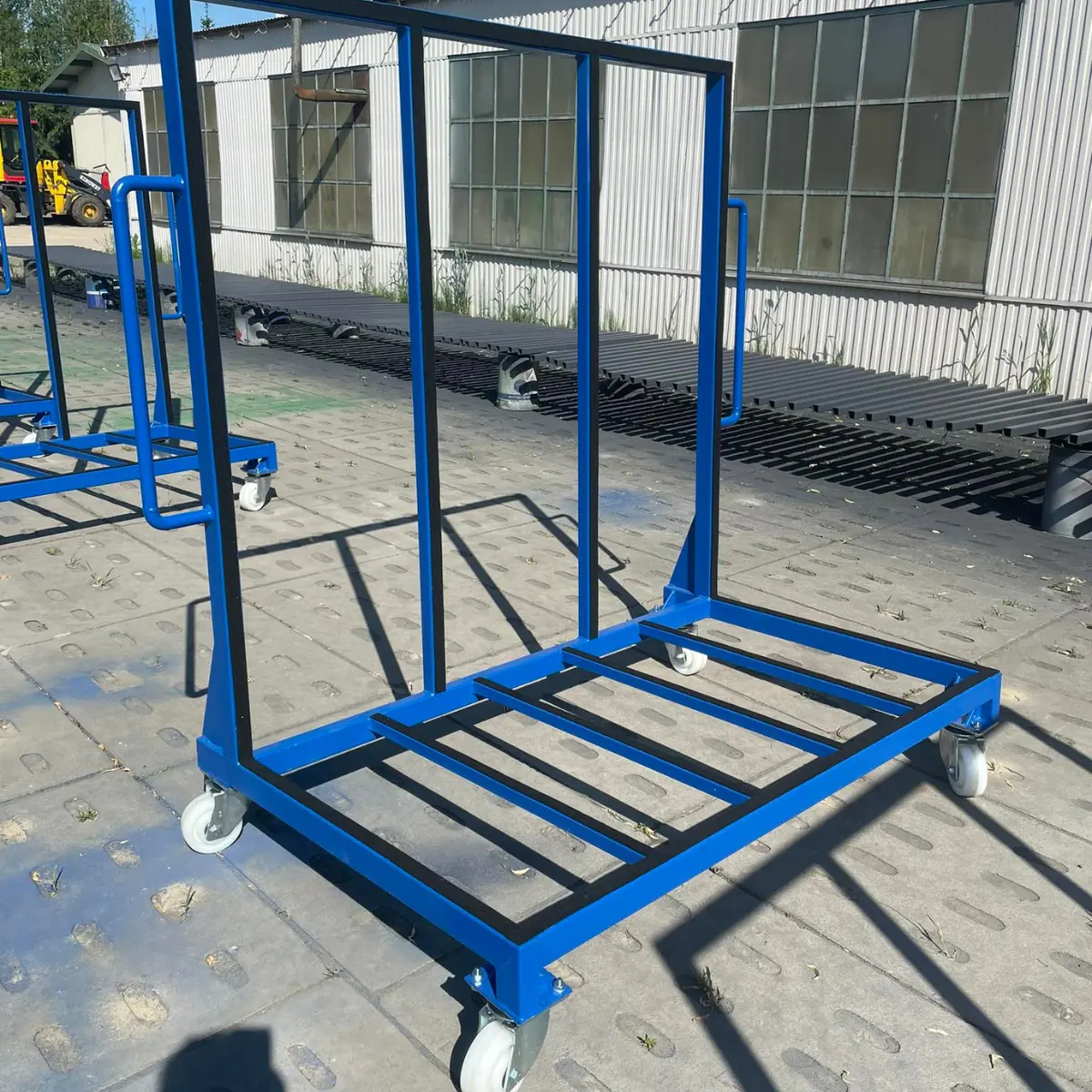
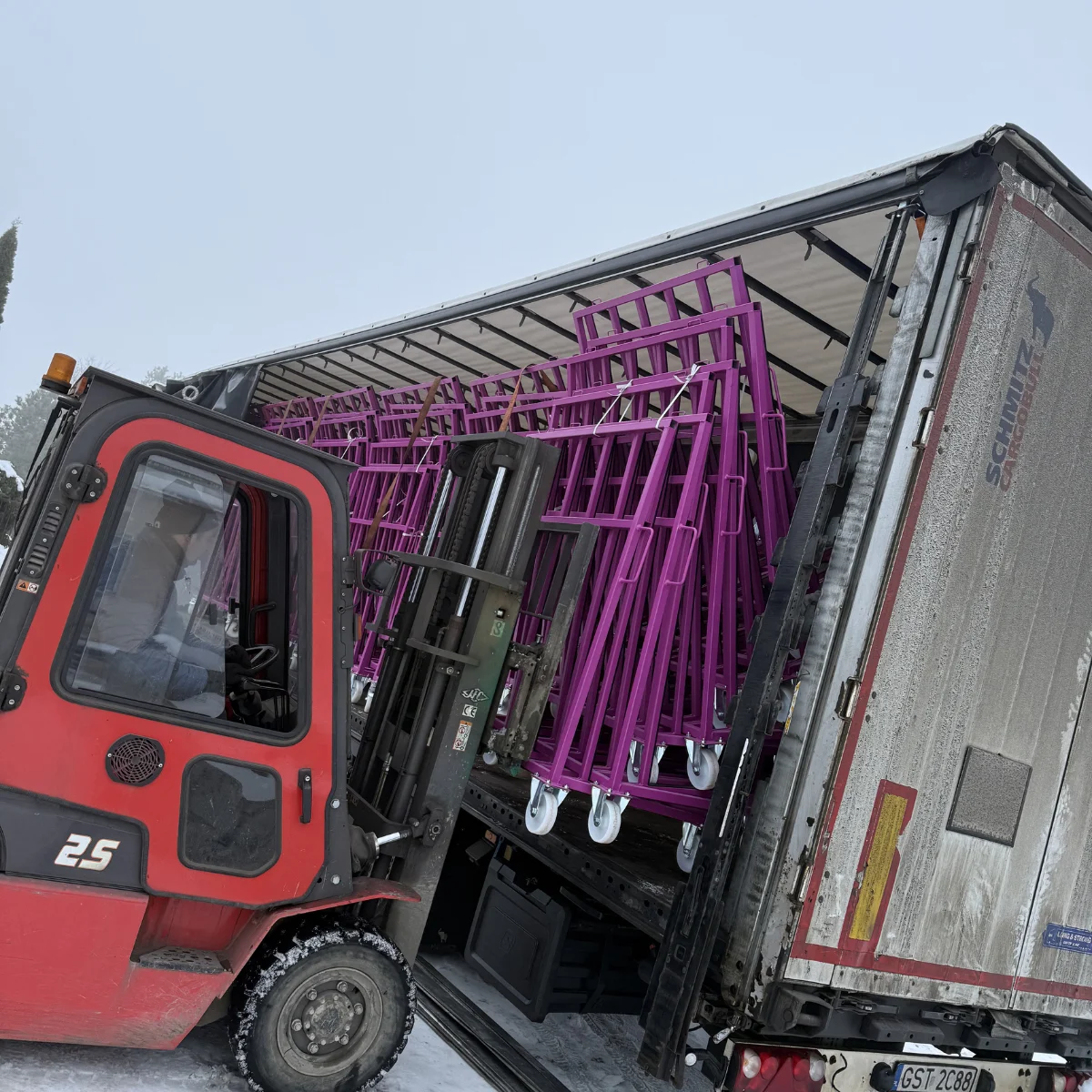
The STPG single-sided raised L-frame glass trolley
(120×80×180 cm) fills the gap between the standard type L trolley (160 cm) and the double-sided type A trolley (200 cm). At 20 cm taller (180 vs 160 cm) and 20 cm longer (120 vs 100 cm), it is designed for assembly stations that regularly receive entrance doors without transoms and windows at 165–170 cm — elements that on a 160 cm trolley require precise handling to avoid exceeding the frame.
Raised L trolley vs standard L trolley vs A-frame trolley
Type L trolley (100×80×160 cm) — balcony windows up to 150 cm and interior doors, aisles from 120 cm. Raised trolley (120×80×180 cm) — entrance doors without transoms and windows up to 170 cm, aisles from approximately 140 cm. Type A trolley (200×80×200 cm) — full format range with double-sided loading, wide halls. Practical rule: trolley height should be at least 10 cm taller than the tallest element in the typical load.
Why is rear-frame bracing critical at 180 cm?
At 180 cm without bracing the frame deflects under full load — the trolley begins to tilt forward when manoeuvring. STPG fits additional rear-frame bracing as standard at this height.
Order process and warranty
Photo documentation at every stage. 24-month manufacturer’s warranty.
WE MANUFACTURE STANDS AND PALLETS IN VARIOUS SIZES PER INDIVIDUAL CUSTOMER ORDER!!!
FAQ
What is the difference between the raised L-frame trolley and the standard type L trolley?
The raised trolley is taller (180 cm vs 160 cm) and longer (120 cm vs 100 cm). As a result, it handles entrance doors without transoms and windows up to 170 cm. The standard L trolley, on the other hand, suits balcony windows up to 150 cm.
What elements fit on the raised L-frame trolley?
Basically, it takes elements up to approximately 170 cm tall. These include entrance doors without transoms, small-format facade windows and oversized balcony windows. For doors with transoms, however, we recommend a custom-dimension or type A trolley.
Is rear-frame bracing essential at 180 cm height?
Yes — at 180 cm without bracing, the frame deflects under full load. As a result, tilt risk rises during manoeuvring. For that reason, the bracing counts as a safety element, not an option.
What castor options are available?
Basically, we offer polyamide castors in three versions. Swivel castors, firstly, give full movement freedom. Fixed castors, on the other hand, move linearly. Swivel castors with a brake, finally, add parking security. In each case, we select them to suit your working environment.
What is the warranty?
Above all, we back every unit with a 24-month manufacturer’s warranty.